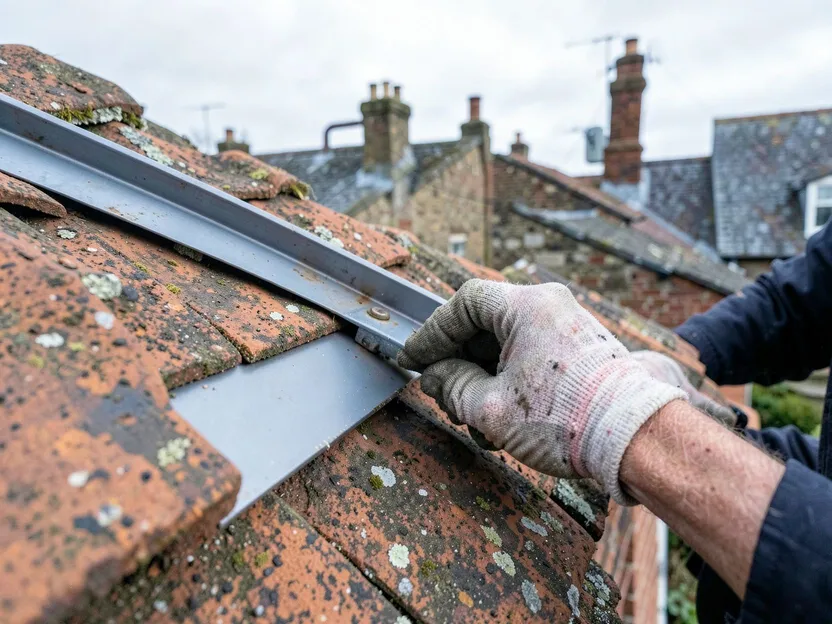
Hooks under the tiles
Each rail hangs on steel hooks fixed to the rafters under lifted tiles. Nothing is drilled through a tile, and the tiles go back as they were.
Solar panels
All-black 430-watt panels, a hybrid inverter that takes a battery later, and the app. One price, fitted, and you pay once they’re switched on.
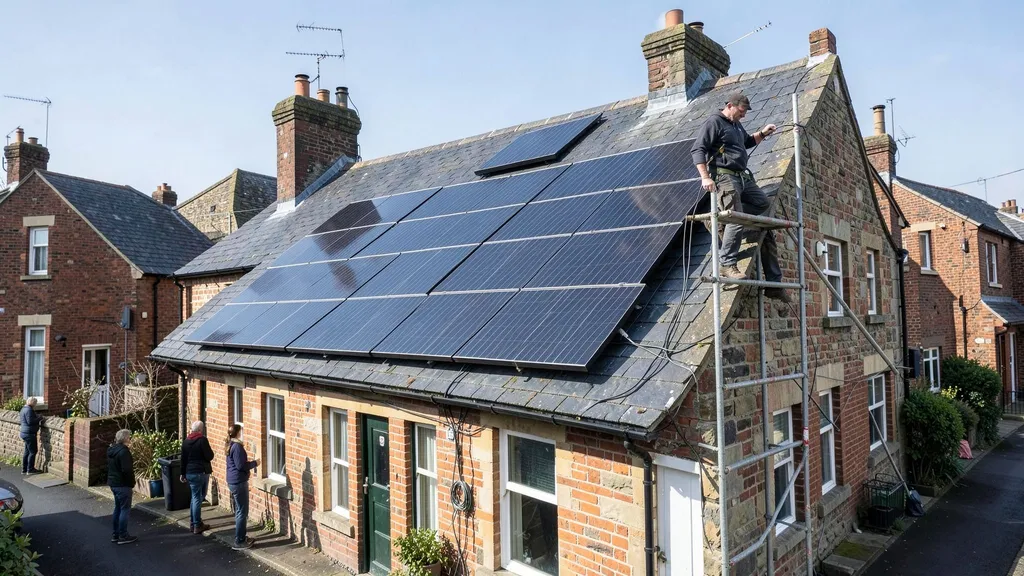
On a south roof with no shade. Your roof check gives the figures for yours.
6 panels · 2.6 kWp · for 1–2 people
£3,940 fitted
Fits most homes
10 panels · 4.3 kWp · for 3–4 people
£5,900 fitted
14 panels · 6 kWp · 5 kWh battery · for 4–5 people
£11,260 fitted
The three systems on a south roof with no shade, held against twenty-five years of savings. The bar fills until the savings have paid the price.
Swipe the table for every column
| System | Price | A year | Pays back in | After 25 years |
|---|---|---|---|---|
| Small roof6 panels | £3,940 | £456 | £6,800clear profit | |
| Family roof10 panels | £5,900 | £755 | £11,880clear profit | |
| Full roof + battery14 panels + 5 kWh | £11,260 | £1,213 | £17,310clear profit |
Each rail hangs on steel hooks fixed to the rafters under lifted tiles. Nothing is drilled through a tile, and the tiles go back as they were.
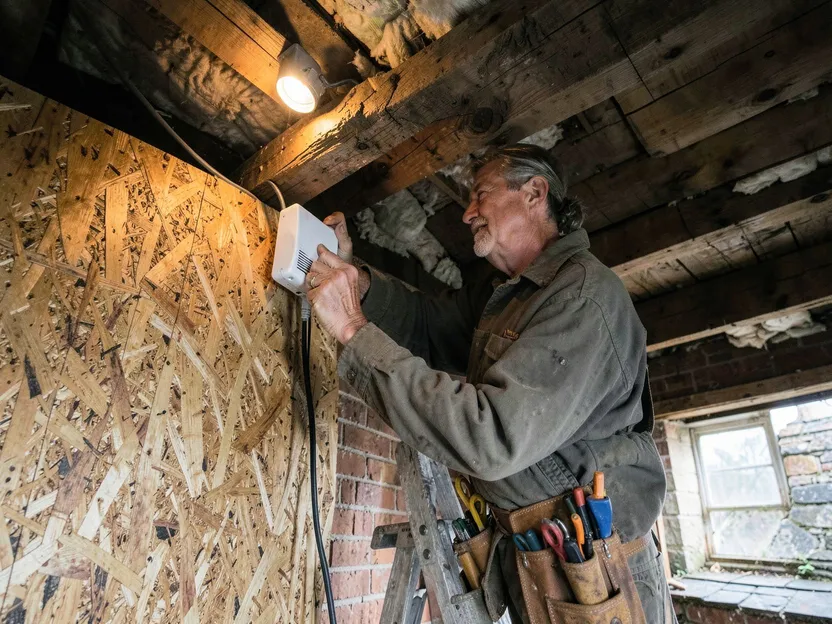
The inverter goes on a board in the loft or the garage, with an isolator beside it. The cable runs inside the house to the fuse box.
Grants and export payments have their own page.
For most houses with a south, east or west roof, yes. The panels pay for themselves in seven to nine years at today’s prices and keep working for twenty-five or more. The calculator shows the sum for your use and your roof.
Then panels go on both slopes. Each side makes less at noon than a south roof would, but together they spread the power over the day, which suits a house where someone is home. See the Leeds bungalow in our projects.
There is no grant for panels in England, but they carry 0% VAT, and the Smart Export Guarantee pays for the power you send back. Our prices already have the VAT off.
Your energy supplier pays you for every kWh sent to the grid under the Smart Export Guarantee. Rates run from about 4p to 15p a kWh; the calculator uses 15p, a rate several suppliers pay to customers with panels.
Yes. We fit a hybrid inverter as standard, so a battery plugs in later without changing anything on the roof. It costs the same as on day one, less the scaffold.
Usually not: panels on a house roof are permitted development. A listed building, a flat roof or a house in a conservation area may need it; we check with your council before the survey.